
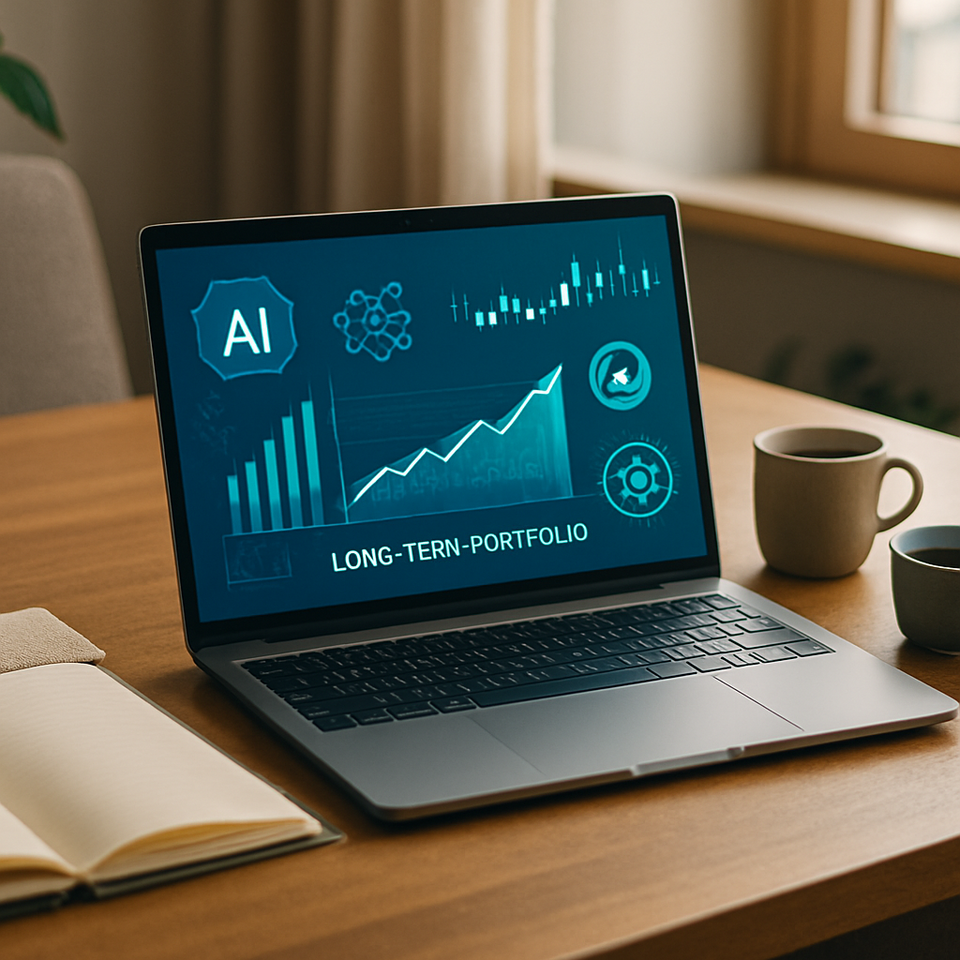
Introduction: The Power of AI in Long-Term Investments
AI in long-term investments is fundamentally reshaping financial planning, offering groundbreaking advantages for both institutional and retail investors. As technology advances, artificial intelligence tools have made it essential for anyone managing assets over extended timeframes to understand AI’s growing influence. With enhanced risk modeling, predictive analytics, and hyperautomation, the financial industry now benefits from a new era of precision, adaptability, and efficiency.
These changes affect not just banks and funds, but also individuals planning for secure retirements. In this rapidly shifting landscape, knowing how AI in long-term investments changes strategies can be the difference between financial stagnation and sustainable growth. This guide explores the full impact of artificial intelligence on investment planning, navigating its strengths, risks, and practical uses for 2025 and beyond.
Understanding Artificial Intelligence in Investment Planning
Artificial intelligence in long-term investment planning goes far beyond automating simple transactions. AI refers to machine-driven algorithms that interpret vast amounts of data, recognize subtle patterns, and make adaptive recommendations. Unlike traditional investment models—often rigid, backward-looking, and limited by human biases—AI systems update constantly using real-time pricing, economic data, and even alternative signals such as online sentiment or satellite imagery.
Through machine learning, these systems detect trends in equities, bonds, and alternative assets by evaluating countless variables that would overwhelm any manual process. For example, robo-advisors built on AI can personalize portfolios, automate tax-loss harvesting, and enforce discipline during volatile markets. They process more information in seconds than an individual analyst could in weeks, which directly benefits anyone involved in long-horizon investing. The financial world increasingly relies on these technologies, making familiarity with AI capabilities crucial for modern investors.
Why AI in Long-Term Investments Matters for Future Success
The growing importance of AI in long-term investments stems from the need for robust risk management and maximized returns over decades. Traditional strategies—built on static allocations or infrequent rebalancing—often falter during market disruptions. AI, however, can continuously rebalance portfolios based on predictive analytics, adjusting exposures ahead of known and unforeseen market events.
Additionally, AI enables portfolios to remain diversified across sectors, industries, and even geographic regions, recalibrating in response to major news or shifts in global markets. This agility is particularly beneficial for retirement savers who require both growth and capital preservation over many years. By reducing behavioral biases and emotional reactions—such as panic during downturns—AI-driven platforms foster discipline and long-term perspective.
Moreover, AI in long-term investments empowers investors with tools to manage sequence-of-returns risk—a critical aspect of retirement planning that determines whether capital endures as intended. These machine-driven strategies not only preserve wealth but often uncover opportunities previously hidden from traditional analysis.
Key AI Strategies for Long-Term Investment Management
Several core AI strategies are revolutionizing long-term investment management:
1. Predictive Analytics for Asset Allocations: AI platforms analyze macroeconomic indicators, company earnings, and market sentiment to anticipate asset price trends. This predictive power allows for timely shifts in allocations between equities, bonds, and alternatives.
2. Machine Learning in Factor Investing: Models optimize exposures to style factors—such as value, momentum, or volatility—by processing large data sets across multiple asset classes. This granular optimization means portfolios can better capture sources of return.
3. Robo-Advisors and Portfolio Automation: AI-driven robo-advisors construct customized long-term portfolios and automate routine maintenance tasks like rebalancing or tax-loss harvesting. This democratizes sophisticated strategies once limited to institutions.
4. Stress Testing and Scenario Analysis: Algorithms simulate a range of potential market shocks—pandemics, recessions, regulatory changes—to prepare portfolios for resilience. This process mitigates downside risk and supports sustainable, long-term performance.
5. ESG and Sustainable Investing: Advanced AI scans for environmental, social, and governance (ESG) factors across investment opportunities, offering insights into sustainable, ethical options increasingly important for modern investors.
Utilizing these strategies, investors align their long-term goals with technology that learns and adapts, delivering measured growth while proactively managing risk.
Personalization and Hyperautomation: AI’s New Era
A striking feature of AI in long-term investments is its ability to personalize financial planning for every individual. AI no longer serves institutions alone; its applications reach everyday savers and retirees through hyperpersonalized advice. Advanced systems now analyze spending, income, life milestones, and even health data to tailor retirement plans dynamically.
For example, adaptive withdrawal algorithms automatically adjust annual distributions according to market conditions, life expectancy, or unplanned expenses. Cash flow management becomes seamless, with systems monitoring balances and suggesting optimal savings or investment rates. Even the glidepath—a portfolio’s risk profile as the investor ages—can evolve based on the latest information, ensuring the best fit from mid-career through retirement.
Financial technology firms leverage these capabilities to provide affordable, high-quality advice at scale. Digital assistants and chatbots offer instant answers on everything from tax strategy to legacy planning, democratizing access that was once exclusive to high-net-worth individuals. On the back-end, robotic process automation driven by AI slashes administrative costs and reduces human error, further improving long-term outcomes.
Challenges and Risks: Navigating the Limitations of AI
Despite clear advantages, integrating AI in long-term investments brings unique risks. Foremost is the issue of model overfitting—where algorithms become too specialized to past data and fail when facing new, unforeseen events. Bias in training data can further erode decision quality, especially if inputs reflect systemic inequalities or outdated information.
Transparency is another concern. Many advanced AI models function as “black boxes,” making it difficult for investors and regulators to understand how decisions are made. This opacity can undermine trust, leading to significant questions about reliability and accountability. Regulatory scrutiny is increasing, and new guidelines on the use of artificial intelligence in finance are likely to evolve.
Systemic risk arises when many institutions rely on similar AI-driven models. If these models react to shocks in the same way, market disruptions can be amplified. For individual investors, overreliance on automated platforms without human oversight may produce suboptimal outcomes, especially if personal circumstances change. Maintaining rigorous model validation, diversified data sources, and human review is essential to mitigate these challenges.
AI in Long-Term Investment Strategies: Real-World Examples
Leading financial institutions already showcase how AI in long-term investments delivers tangible benefits. Major banks now deploy machine learning models that analyze years of market data to optimize asset mixes for endowments and pensions. For example, retirement plan providers use AI to recommend savings rates, rebalance target-date funds, and alert users to potential risks during turbulent times.
Fintech startups also capitalize on AI’s power by offering robo-advisor platforms to millions of retail clients. These platforms build customized portfolios in minutes, automate tax-efficient strategies, and maintain constant vigilance against market shifts. Forward-thinking asset managers incorporate environmental or social metrics—analyzed by AI—to help clients align investments with their values while ensuring competitive long-term returns.
On the regulatory front, authorities like the [IMF] continue to assess how AI-driven financial systems affect global stability and set emerging best practices. These approaches illustrate the blend of innovation and caution required for sustainable adoption.
How to Safely Integrate AI into Your Long-Term Investment Plan
To benefit from AI in long-term investments while ensuring sound oversight, investors should follow several best practices:
1. Vet Platforms Thoroughly: Choose AI-enabled investment services with transparent methodologies, historical performance records, and clear data governance. Look for independent third-party audits and regulatory registration.
2. Maintain Human Oversight: AI excels at number crunching, but context and judgment matter. Periodically review automated decisions, consulting with advisors or committees to address life changes, tax law updates, and shifting goals.
3. Prioritize Cybersecurity: Digital tools require robust protections. Select platforms with strong encryption, multi-factor authentication, and clear privacy policies.
4. Personalize the Experience: Maximize AI’s benefits by providing comprehensive data—income, spending, career milestones, goals. Engage with platforms that adapt to your unique financial profile, not just generic models.
5. Diversify Strategies: Avoid putting all trust in one algorithm or provider. Combine AI-driven recommendations with traditional analysis and diversified asset classes to reduce risk and improve outcomes.
As the landscape evolves, keeping up-to-date on the latest innovations and regulatory guidelines through trusted sources such as the [OECD report] will further support savvy, resilient planning.
Education and the Future of AI in Investment
Beyond adopting AI technology, advancing financial literacy remains essential. The investors achieving the most sustainable long-term results are those who pair technical tools with ongoing education. Understand not just what the system recommends, but also why. Work with financial professionals who embrace transparency, continuous learning, and the ethical use of data-driven solutions.
Emerging trends in AI, such as explainable machine learning and collaborative human-machine interfaces, promise a future where technology supports—not replaces—sound financial judgment. As global markets and regulations adapt, leadership in long-term financial planning will require both digital and human intelligence.
Conclusion: The Lasting Value of AI in Long-Term Investments
The arrival of AI in long-term investments marks a new chapter for anyone seeking robust financial security. Artificial intelligence delivers powerful risk management, hyperpersonalization, and operational efficiency, creating unmatched opportunities across retirement and wealth planning. By blending AI strategies with consistent human oversight and ongoing education, investors can build not only wealth but also confidence in a rapidly evolving world.
Embracing AI in long-term investments is not simply about technology. Rather, it is a future-oriented mindset—one that matches dynamic tools with the timeless principles of diversification, risk control, and thoughtful planning. For modern investors, staying informed and adaptable ensures financial goals remain achievable, no matter how markets or technology change.