
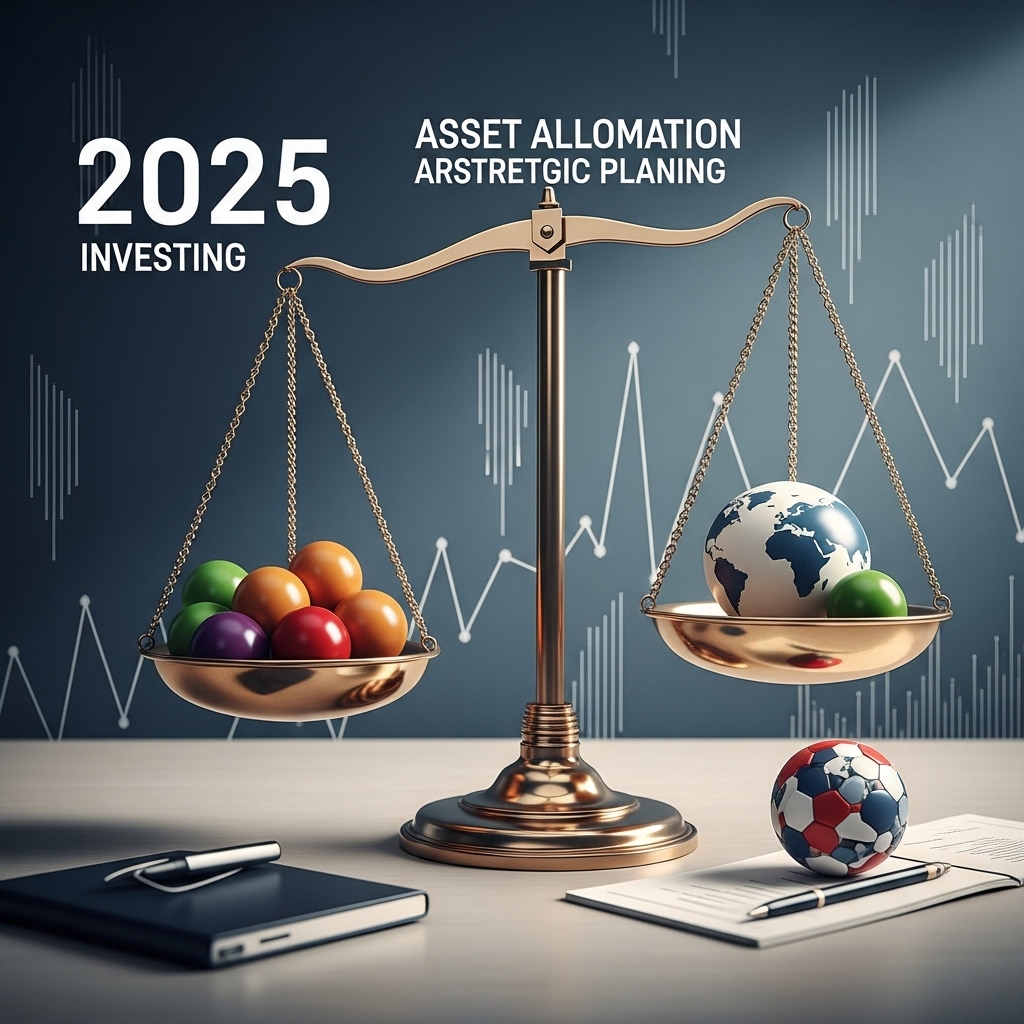
Investing in 2025 requires more than selecting attractive assets or following market trends. Global markets move quickly, correlations shift unexpectedly, and economic cycles evolve with little warning. In this environment, asset allocation stands out as one of the most important decisions an investor can make. It determines how risk and opportunity are distributed across a portfolio and influences outcomes more consistently than individual security selection.
Moreover, asset allocation provides structure in uncertain conditions. Instead of reacting to headlines or short-term performance, investors rely on a framework that aligns investments with objectives, time horizons, and risk tolerance. This approach reduces emotional decision-making and supports long-term discipline.
This article explores asset allocation in depth, explaining what it is, why it matters in 2025, and how investors can design allocation strategies that adapt to changing conditions while remaining aligned with long-term goals.
What Is Asset Allocation?
Defining asset allocation in practical terms
Asset allocation refers to the process of dividing a portfolio among different asset categories such as equities, fixed income, real assets, and cash. Each category behaves differently across economic environments. By combining them intentionally, investors seek to balance risk and return.
Importantly, asset allocation focuses on structure rather than selection. While choosing individual investments matters, the overall mix often has a greater impact on long-term results.
Why allocation decisions shape portfolio behavior
Asset allocation determines how a portfolio responds to market events. During equity rallies, growth-oriented allocations perform well. During downturns, defensive allocations protect capital.
As a result, asset allocation acts as the portfolio’s primary risk management tool.
Why Asset Allocation Matters in 2025
Increased market interconnectedness
Markets in 2025 are highly interconnected. Global events influence asset prices almost instantly. As correlations fluctuate, relying on a single asset class increases vulnerability.
Asset allocation mitigates this risk by spreading exposure across assets with different drivers.
Changing economic regimes
Interest rates, inflation, and growth expectations shift more frequently than in previous decades. No single asset performs best in all conditions.
Asset allocation prepares portfolios for multiple scenarios rather than betting on one outcome.
Greater individual responsibility
With more individuals managing their own investments, allocation decisions become personal and consequential. A thoughtful structure supports consistency and confidence.
Core Asset Classes in Asset Allocation
Equities and growth exposure
Equities represent ownership in companies and provide long-term growth potential. They tend to outperform over long horizons but experience higher volatility.
Asset allocation balances equity exposure to match risk tolerance and time horizon.
Fixed income and stability
Fixed income assets provide income and stability. They often perform differently than equities during market stress.
Including fixed income improves balance and reduces volatility.
Real assets and inflation sensitivity
Real assets such as real estate or commodities respond to inflation and supply dynamics. They add diversification and protection in certain environments.
Their role depends on market conditions and objectives.
Cash and liquidity
Cash provides flexibility and optionality. While it offers limited returns, it enables opportunity and stability.
Asset allocation includes cash strategically rather than incidentally.
Strategic vs. Tactical Asset Allocation
Strategic asset allocation defines long-term targets based on goals, risk tolerance, and time horizon. It remains relatively stable over time.
This foundation supports discipline and consistency.
Tactical adjustments within limits
Tactical allocation involves temporary adjustments in response to market conditions. While it can add value, it requires skill and restraint.
Most investors benefit from keeping tactical changes limited.
Asset Allocation and Risk Tolerance
Understanding risk capacity versus risk comfort
Risk tolerance includes both emotional comfort and financial capacity. Asset allocation must reflect both.
Ignoring either component leads to poor adherence.
Adjusting allocation as circumstances change
Risk tolerance evolves with age, experience, and responsibilities. Asset allocation should adjust gradually rather than abruptly.
This evolution preserves alignment.
Time Horizon and Asset Allocation
Long horizons and growth emphasis
Longer time horizons support higher growth exposure. Volatility matters less when time absorbs fluctuations.
Asset allocation reflects this advantage.
Shorter horizons and preservation focus
Shorter horizons prioritize capital preservation and liquidity. Allocation shifts toward stability.
Protecting near-term goals becomes essential.
Asset Allocation Across Life Stages
Early accumulation phase
Early stages emphasize growth and learning. Asset allocation supports long-term accumulation while tolerating volatility.
Flexibility remains high.
Midlife balancing phase
Midlife introduces competing priorities. Allocation balances growth with stability.
Risk management gains importance.
Pre-retirement and income focus
Later stages emphasize income and preservation. Asset allocation supports predictability.
Exposure becomes more defensive.
Common Asset Allocation Mistakes
Overconcentration in familiar assets
Familiarity often drives concentration. While comforting, it increases risk.
Intentional diversification improves outcomes.
Ignoring allocation drift
Market movements change allocation over time. Without review, portfolios drift away from targets.
Monitoring maintains balance.
Chasing recent performance
Allocating based on recent winners increases risk. Asset allocation should be forward-looking and disciplined.
Consistency outperforms reaction.
Implementing Asset Allocation in Practice
Defining clear objectives
Clear goals guide allocation decisions. Objectives anchor structure.
Clarity prevents confusion.
Selecting appropriate investment vehicles
Funds, ETFs, and other vehicles implement allocation efficiently. Simplicity improves manageability.
Vehicles serve strategy, not vice versa.
Reviewing and adjusting periodically
Regular review ensures alignment. Adjustments should be measured and intentional.
Discipline preserves benefits.
Behavioral Benefits of Asset Allocation
Reducing emotional decision-making
A clear allocation framework reduces impulsive reactions. Decisions follow structure rather than emotion.
Calm improves consistency.
Supporting long-term discipline
Asset allocation encourages staying invested across cycles. Discipline supports compounding.
Behavioral alignment enhances results.
Technology and Asset Allocation
Portfolio analysis and visualization tools
Modern tools reveal allocation, risk exposure, and correlations. Insight improves decision-making.
Tools inform rather than replace judgment.
Automation and consistency
Automation supports consistent implementation. Oversight ensures relevance.
Technology enhances discipline.
Asset Allocation in a Global Context
Geographic diversification
Global exposure reduces reliance on single economies. Asset allocation incorporates geographic balance.
Global perspective improves resilience.
Currency considerations
Currency exposure influences returns. Asset allocation accounts for currency risk implicitly or explicitly.
Awareness improves outcomes.
Measuring Asset Allocation Success
Risk-adjusted performance
Success reflects stability and consistency rather than peak returns.
Risk-adjusted metrics matter.
Alignment with goals and behavior
Effective asset allocation supports adherence and confidence.
Alignment defines success.
Action Steps to Improve Asset Allocation
Step one: Assess current allocation honestly
Understand what drives portfolio behavior.
Step two: Identify mismatches with objectives
Look for gaps between structure and goals.
Step three: Adjust gradually
Gradual changes reduce disruption.
Step four: Review annually or after major changes
Regular review maintains alignment.
Structuring a Portfolio Around Risk Instead of Predictions
Many investors attempt to predict which assets will perform best next. However, prediction-based approaches often fail because markets incorporate information quickly. A more durable method focuses on structuring exposure around different types of risk.
By spreading exposure across growth drivers, income sources, and defensive components, portfolios become less dependent on any single outcome. Consequently, unexpected events create disruption, not devastation.
This structure does not aim to avoid volatility entirely. Instead, it manages how volatility impacts overall results.
The Importance of Balance Across Market Cycles
Markets move through cycles. Expansion, slowdown, contraction, and recovery repeat over time. No single investment performs well across all phases.
Balanced portfolios recognize this reality. They accept that some components will lag while others lead. Over time, leadership rotates.
This rotation smooths outcomes and reduces pressure to constantly intervene.
Why Concentration Feels Comfortable but Creates Fragility
Concentration often feels logical. Familiar assets seem safer. Recent winners inspire confidence. However, familiarity can mask hidden risk.
When portfolios rely heavily on one theme, region, or asset type, outcomes become fragile. A single adverse event can undo years of progress.
Spreading exposure intentionally replaces false comfort with real resilience.
Managing Volatility Without Avoiding Growth
Volatility often gets labeled as the enemy. In reality, volatility represents the price of long-term growth. Avoiding it entirely usually limits progress.
The challenge lies in managing volatility, not eliminating it. Combining assets that respond differently to market stress reduces overall swings while preserving upside.
This balance allows investors to remain invested during turbulent periods.
Aligning Portfolio Structure With Human Behavior
Technical design alone does not guarantee success. Human behavior plays a decisive role. Portfolios that feel too aggressive trigger panic. Overly conservative structures create frustration.
Effective portfolio construction considers emotional tolerance alongside financial capacity. When investors feel comfortable, they adhere more consistently.
Consistency matters more than perfect design.
The Role of Diversification Beyond Labels
Diversification often gets reduced to counting assets. However, true diversification depends on behavior under stress.
Two investments with different names may respond identically to certain risks. Conversely, assets from the same category may behave differently under specific conditions.
Understanding underlying drivers improves diversification quality.
Adjusting Exposure Gradually Over Time
Life evolves. Income changes. Responsibilities grow. Risk tolerance shifts. Portfolio structures must adapt accordingly.
Gradual adjustment preserves stability. Sudden changes introduce timing risk and emotional strain.
Incremental shifts support smoother transitions across life stages.
Income, Stability, and Optionality
Some portfolio components generate growth. Others provide income. Still others preserve flexibility.
Each role matters. Growth fuels long-term progress. Income supports predictability. Optionality enables opportunity during disruption.
Balancing these roles improves both financial and psychological outcomes.
The Influence of Time Horizon on Portfolio Decisions
Time horizon shapes tolerance for fluctuation. Longer horizons absorb volatility more easily. Shorter horizons require protection.
Recognizing this relationship prevents mismatches. Aligning exposure with time horizon reduces forced decisions.
Clarity improves confidence.
Liquidity as a Strategic Asset
Liquidity often gets overlooked. Yet liquidity provides freedom. It allows investors to meet needs, rebalance during stress, or seize opportunity.
Portfolios that lack liquidity may perform well on paper but fail in practice.
Maintaining liquidity strengthens resilience.
Avoiding Overreaction During Market Stress
Stress reveals weaknesses. During downturns, poorly structured portfolios force painful choices.
Balanced structures reduce urgency. Losses feel manageable. Decisions remain rational.
This calm response preserves long-term progress.
Learning From Historical Market Behavior
History does not repeat perfectly, but it rhymes. Studying past cycles reveals how different assets behave under pressure.
These patterns inform better structure. They discourage overconfidence in any single narrative.
History provides perspective.
The Trade-Off Between Simplicity and Precision
Complex structures promise precision. Simpler ones offer clarity. For most investors, clarity wins.
Simple portfolios are easier to understand, monitor, and maintain. They encourage discipline.
Precision matters less than adherence.
Portfolio Maintenance as an Ongoing Process
Portfolio construction is not a one-time event. Market movements change proportions. Life changes priorities.
Periodic review ensures alignment. Maintenance preserves intent.
Neglect leads to drift.
Using Rules to Reduce Emotional Bias
Rules protect against emotion. Predefined ranges, review schedules, and adjustment guidelines create discipline.
Rules remove guesswork during stress.
Structure replaces impulse.
Integrating Portfolio Decisions With Broader Financial Systems
Portfolios do not exist in isolation. They interact with income, spending, reserves, and obligations.
Integrating these elements improves coherence. Decisions align across the full financial picture.
Integration strengthens outcomes.
Long-Term Confidence Built on Preparedness
Confidence comes from preparedness, not prediction. Knowing that portfolios can absorb shocks reduces anxiety.
Prepared investors act deliberately rather than reactively.
This confidence compounds over time.
Turning Structure Into a Competitive Advantage
Most investors chase returns. Fewer focus on structure. Structure becomes a competitive advantage.
Well-structured portfolios allow patience. Patience enables compounding.
Discipline outperforms excitement.
Conclusion
Asset allocation remains a cornerstone of smarter investing in 2025. As markets grow more complex and uncertainty persists, a thoughtful allocation framework provides structure, balance, and discipline. Rather than reacting to short-term noise, investors who focus on asset allocation position themselves to navigate changing conditions with confidence.
Ultimately, asset allocation transforms investing from a series of guesses into a coherent strategy. By aligning risk, time horizon, and objectives, investors improve their ability to stay invested and achieve long-term goals. Learn more about how to diversify your portfolio effectively and continue refining strategies that support sustainable investment success.